

Estimated reading time: 14–16 minutes
Art therapy is often misunderstood as a fixed set of activities—drawing feelings, painting emotions, or using creative materials as a supplement to talk therapy. In practice, its true strength lies in flexibility. The same core technique can be meaningfully adapted for a child who cannot yet verbalize emotions, an adult processing trauma, a school-based group navigating social stress, or a clinical client managing neurological or physical limitations.
This adaptability is not accidental. Art therapy is rooted in principles of psychological safety, sensory regulation, symbolic communication, and relational attunement. When these principles are honored, techniques can be reshaped across ages, contexts, and abilities without losing therapeutic depth.
This article explores how art therapy techniques can be thoughtfully adapted for children, adolescents, adults, groups, schools, and clinical settings. Rather than presenting isolated activities, the focus is on how and why adaptations work—so practitioners, educators, and facilitators can make informed, ethical, and effective choices.
What You Will Learn
-
How core art therapy principles remain consistent across ages and settings
-
Ways to adapt the same technique for children, adults, and mixed-age groups
-
How art therapy supports emotional regulation in schools and classrooms
-
Practical considerations for adapting techniques for cognitive, physical, and sensory differences
-
How clinical settings shape structure, pacing, and containment in art therapy
-
Ethical and trauma-informed guidelines for flexible, inclusive practice
The Core Principle: Technique Serves the Person, Not the Other Way Around
At the heart of effective art therapy is a simple rule: the individual’s needs determine the form, pace, and depth of the intervention. Materials, instructions, and expectations are adjusted to support emotional safety, autonomy, and meaning-making.
A single technique—such as drawing inside a boundary—may serve very different functions depending on context:
-
For a child, it may support impulse control and emotional naming
-
For an adult, it may offer containment during trauma processing
-
For a group, it may foster shared structure and mutual respect
-
For a neurodivergent client, it may provide predictability and sensory grounding
Understanding this principle allows therapists to adapt creatively while maintaining clinical integrity.
Adapting Art Therapy for Children
Developmental Considerations
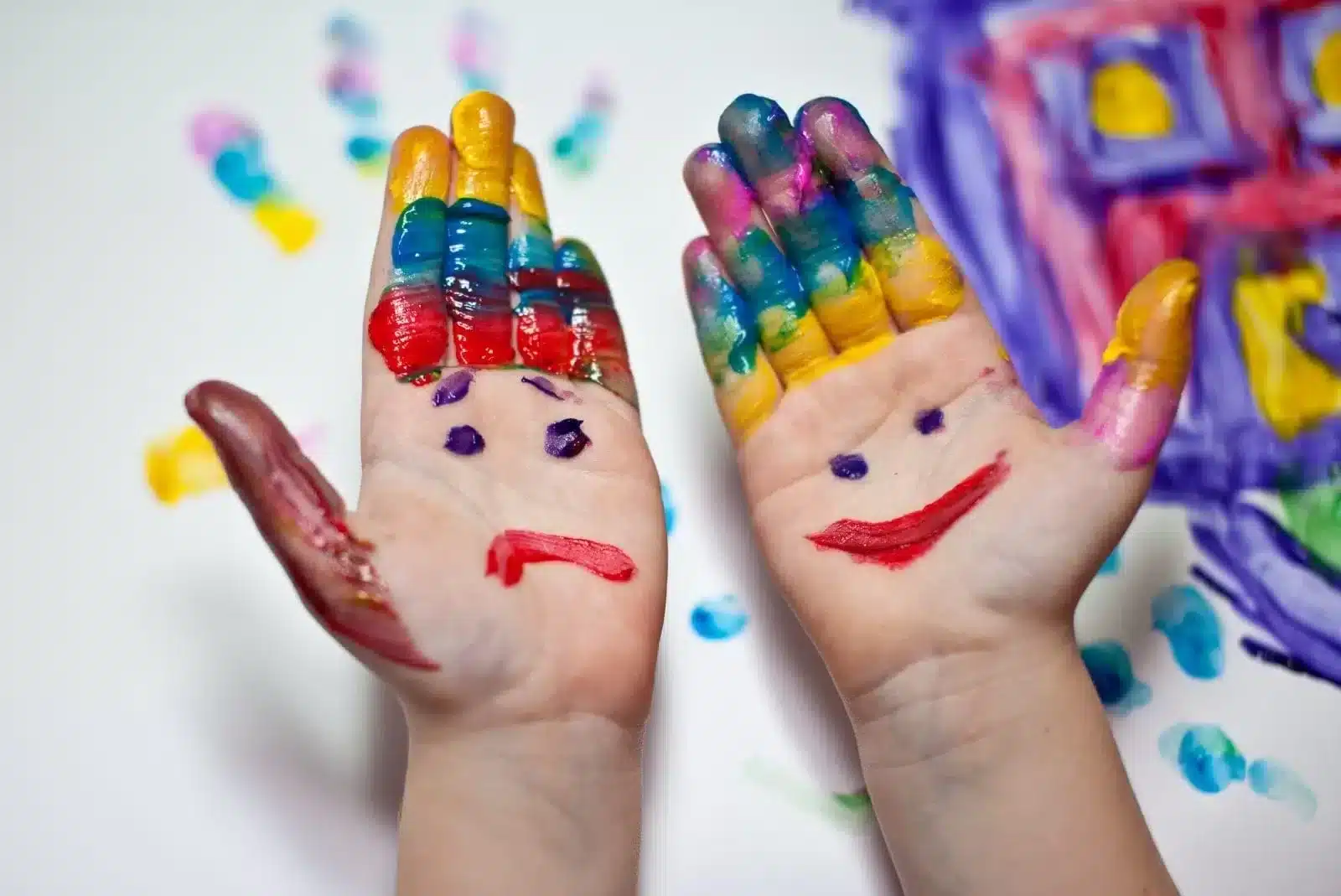
Children often lack the language, cognitive abstraction, or emotional awareness needed for traditional verbal therapy. Art becomes their primary language—not a supplement.
Effective adaptations for children typically emphasize:
-
Simplicity of instructions
-
Sensory engagement (texture, movement, color)
-
Short, flexible timeframes
-
Playfulness without pressure to “perform”
Technique Example: Contained Scribble Drawing
Base technique: Drawing freely within a defined shape (circle, square, outline).
Adaptation for children:
-
Use large paper and thick crayons or markers
-
Frame the activity as a game or exploration
-
Avoid interpretation; invite storytelling instead
-
Focus on “what it feels like” rather than “what it means”
This supports emotional discharge while preserving a sense of safety and control.
Emotional Regulation Through Structure
Children often benefit from clear but gentle structure. Boundaries on the page mirror emotional boundaries, helping children externalize and manage overwhelming feelings without becoming dysregulated.
Adapting Art Therapy for Adolescents
Adolescents occupy a unique space between concrete and abstract thinking. They may resist activities that feel childish while still benefiting from nonverbal expression.
Key Adaptation Strategies
-
Offer choice and autonomy in materials
-
Frame activities as tools, not therapy “assignments”
-
Respect privacy and avoid forced sharing
-
Connect art-making to identity, values, or personal narratives
Technique Example: Visual Metaphor Mapping
Base technique: Representing internal states through symbols.
Adaptation for adolescents:
-
Invite metaphor creation (storms, landscapes, masks)
-
Allow digital or mixed-media formats if appropriate
-
Emphasize self-definition rather than interpretation
This approach honors adolescents’ growing need for independence while providing a safe channel for emotional expression.
Adapting Art Therapy for Adults
Adults often come to therapy with entrenched narratives, self-judgment, or difficulty accessing emotion. Art therapy helps bypass cognitive defenses while offering reflective distance.
 Adult-Specific Considerations
-
Normalize discomfort with art-making
-
Emphasize process over aesthetic outcome
-
Connect art to insight, regulation, or meaning-making
-
Respect pacing, especially in trauma-informed work
Technique Example: Image-Based Emotional Check-In
Base technique: Creating a visual representation of current emotional state.
Adaptation for adults:
-
Use limited materials to reduce overwhelm
-
Invite reflection after the art is complete
-
Link visual elements to bodily sensations or thoughts
This technique supports awareness without requiring immediate verbal disclosure.
Adapting Art Therapy for Groups
Group art therapy introduces relational dynamics—comparison, exposure, cooperation, and boundaries. Adaptation focuses on safety, clarity, and mutual respect.
Group-Specific Principles
-
Clear instructions and time limits
-
Predictable structure to reduce anxiety
-
Optional sharing rather than mandatory disclosure
-
Attention to group energy and pacing
Technique Example: Parallel Art-Making
Base technique: Participants create art individually in a shared space.
Adaptation for groups:
-
Same prompt, different materials or outcomes
-
Emphasis on presence rather than discussion
-
Group reflection focused on process, not content
Parallel art-making reduces performance pressure while fostering a sense of shared experience.
Adapting Art Therapy in Schools
School settings require brief, scalable, and curriculum-compatible interventions. Art therapy in schools often supports emotional regulation, social skills, and stress management rather than deep processing.
Practical Constraints
-
Limited time (often 20–45 minutes)
-
Larger groups
-
Developmental and cultural diversity
-
Educational priorities
Effective School-Based Adaptations
-
Use simple, repeatable activities
-
Focus on regulation and expression, not interpretation
-
Integrate art with social-emotional learning goals
-
Avoid pathologizing language
Technique Example: Emotion Color Scales
Students select colors to represent emotional intensity, energy, or stress levels. This builds emotional literacy while remaining developmentally appropriate and non-intrusive.
Adapting Art Therapy in Clinical Settings
Clinical environments—hospitals, mental health clinics, rehabilitation centers—require heightened attention to safety, documentation, and interdisciplinary collaboration.
Clinical Adaptation Considerations
-
Clear therapeutic intent
-
Trauma-informed pacing
-
Attention to sensory sensitivities
-
Coordination with treatment goals
Technique Example: Structured Image Sequencing
Base technique: Creating a sequence of images representing states or transitions.
Clinical adaptation:
-
Short, contained sessions
-
Clear start and end points
-
Emphasis on stabilization rather than exploration
This approach supports processing while minimizing emotional flooding.
Adapting for Different Abilities and Neurodiversity
Art therapy is uniquely positioned to support individuals with cognitive, physical, or sensory differences—provided adaptations are intentional.
Key Adaptation Principles
-
Reduce reliance on verbal instruction
-
Offer sensory choices (not demands)
-
Respect alternative communication styles
-
Focus on experience, not insight
Examples of Ability-Sensitive Adaptations
-
Larger tools for motor limitations
-
Tactile materials for sensory seekers
-
Visual schedules for predictability
-
Repetitive or rhythmic art-making for regulation
The goal is not normalization, but accessibility and dignity.
Ethical and Trauma-Informed Flexibility
Flexibility does not mean improvisation without boundaries. Ethical adaptation requires awareness of power, consent, and emotional safety.
Guiding Questions for Practitioners
-
Does this adaptation increase or reduce safety?
-
Is participation genuinely optional?
-
Are interpretations imposed or invited?
-
Does the activity respect cultural and developmental context?
Trauma-informed practice prioritizes choice, collaboration, and control—values that align naturally with adaptive art therapy.
Why Adaptability Is the Future of Art Therapy
 As therapy moves beyond one-size-fits-all models, adaptability becomes essential. Art therapy’s strength lies not in specific materials or exercises, but in its responsiveness to human complexity.
When techniques are adapted thoughtfully, art therapy becomes:
-
Inclusive across abilities and cultures
-
Effective across developmental stages
-
Scalable across systems and settings
-
Grounded in respect rather than prescription
In this way, adaptability is not a compromise—it is a clinical skill.
Final Reflections
Art therapy thrives at the intersection of structure and freedom. By understanding the underlying principles of techniques, practitioners can adapt responsibly across ages, settings, and abilities without losing therapeutic depth.
Whether in a classroom, clinic, group room, or individual session, art therapy remains a powerful language—one that meets people where words fall short, and adapts as they grow, change, and heal.
References
-
American Art Therapy Association. (2017). Ethical Principles for Art Therapists.
-
Malchiodi, C. A. (2012). Handbook of Art Therapy (2nd ed.). Guilford Press.
-
Malchiodi, C. A. (2020). Trauma and Expressive Arts Therapy. Guilford Press.
-
Klorer, P. G. (2005). Expressive Therapy with Children. Jason Aronson.
-
Rubin, J. A. (2016). Approaches to Art Therapy: Theory and Technique. Routledge.
-
van der Kolk, B. (2014). The Body Keeps the Score. Viking.


